Ambassadors of Islam 
And those who strive hard for Us, We will most certainly guide them in Our ways; and Allah is most surely with the doers of good. 29:69 The Quran

America's Frankenstein's Monsters
Syed Javed Hussain
The US President George W Bush is trying to create yet another monster in the Middle East like his father’s predecessor, Ronald Reagan, in Afghanistan who supported and sustained the resistance movement in Afghanistan against Soviet intervention.
Al-Qaeda and other resistance groups then fighting against the soviets in Afghanistan earned great ovation and respect from the US policy makers and Ronald Reagan called them “the moral equivalent of the founding fathers.”
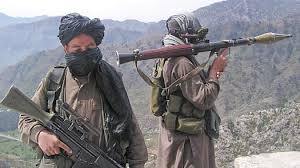
The US blinded by its hatred for the Soviets fully armed an insurgency which also had Saudi Money and Arab manpower as its constituents and finally was able to push back the Soviets. But then Al-Qaeda and its acolytes remained behind in Afghanistan and tried to structure a government and a society that went contrary not only to the norms of most of the Islamic world, it also defied its old masters and finally struck at the very heart of its economic centre.
Refusing to learn lessons from the past the US is doing the same in the Gulf. It is now supporting and sustaining ‘Mujaheedin-i-Khalq’ (MK) who is unsuccessfully and hopelessly trying to overthrow the government of the clergy in Iran. Not long ago they were branded as terrorist organization in the US, whereas presently they have a safe haven in Iraq and are allowed to pursue their disruptive activities against the lawful, legitimate, democratic and popular government in Tehran.
The war hawks in the State Department and Pentagon, now led by
Condoleezza Rice, seem hell-bent to realize their objectives in the Gulf at any cost. British author and feminist, Mary Wollstonecraft Shelley, must be very proud in her grave that playing ‘Fritz’ of her story most US Secretaries of State have no pangs of conscience in choosing their tools to realize their objectives in the Gulf.
The MK has blood on its hands. It is against the Government of the
Clergy but has sought violent means to realize its ends. In June 1981 the MK launched an armed uprising against the Islamic Republican Party (IRP) dominated government. The killing spree that it started in 1981 by killing more than 70 top IRP leaders by bombing the party headquarters in late June and two months later the assassination of Rajai and Bahonar, President and Prime Minister of the nascent democracy, has continued till today.
Thousands of politicians and innocent by-standards have been killed and maimed in frequent bomb blasts in Iran by MK terrorists. They don’t have public-following, therefore, have no hope for a political change in Iran. They are only out there to take revenge from the government as well as its supporters. The same thing is happening in Iraq. Al-Qaeda terrorists are not differentiating between government officials and innocent citizens. They are killing at random whoever falls pray to their attack.
If Al-Qaeda terrorists and their acts of terrorism are wrong and
unjustifiable in Iraq so the MK and its acts of terrorism in Iran are equally unjustified and unlawful and cannot be supported and abetted by the US who in its own right claims to uphold the flag of justice, peace and security for mankind across the globe.
During the eight year long Gulf War, the US and its allies in the region fed billions of dollars to Saddam only to neutralise Iran. Consequently, the monster grew bigger and stronger then its own creator. Before the Desert Storm Iraq under Saddam, in men and armament, was stronger then all the regional Arab powers put together. Just to neutralize Saddam the US had to destroy the country itself. Now it is playing with the destiny of a nation. The US must be careful that its regional policies should not be divorced from the immediate context of Iraq’s geography, its cultural roots andideological moorings.
The US acts of omissions and commissions should not be detrimental to the interests of other brotherly nations in the region. Although most Iraqis are silently thankful to the US for removing Saddam’s oppressive and autocratic regime, yet it should not give wrong signals to the warmongers in the US. Iran and Iraq’s social, cultural and religious ties are so strong that despite Saddam’s utmost efforts and eight-year Gulf War in which
more than 170,000 Iranians were killed, up to 700,000 were injured and thousands are still listed as missing in action, he had not been able to create fissures in them.
The US and Iran relations are clouded. Who is to be blamed? Just before junior Bush the US was on a course to develop good working relationship with Iran and some improvement was made. We are reminded of Madeleine Albright’s major speech delivered on March 17, 2000, in which she had called for improved relations between the United States and the Islamic Republic of Iran.
She announced an easing of economic sanctions against Iranian
products and recognized that a 1953 coup engineered by the United States Central Intelligence Agency had damaged Iran’s political development. It was the closest the United States had come to an apology for the coup. The speech marked a significant step in an effort to repair relations between the two countries.
Most Americans, in the last two decades, have viewed Iran primarily
through the prism of the US Embassy takeover in 1979, accompanied as it was by the taking of hostages, hateful rhetoric and the burning of the US flag. Through the years, this grim view is reinforced by the US successive government’s diatribe against Iran on its so-called ‘support for terrorism abroad,’ which has so far not been substantiated by any evidence; and itsn assistance to groups violently opposed to the Middle East peace process which itself is a futile travesty of justice; and its effort to develop a nuclear weapon capability which Iran has consistently rejected as false and
fabricated charge.
Right from the beginning Mr Bush has pursued hawkish and bullish
policies in the world; he was emphatic before and after Sep 11 he is
threatening. The unfortunate attack of September 11 has only augmented a bent of mind that was already set tight on a certain line of action. We can only put it to him that love begets love and that the consequences of bad act fall on the perpetrator sooner or later. Only nations suffer due to the deeds of their leaders.


