Ambassadors of Islam 
And those who strive hard for Us, We will most certainly guide them in Our ways; and Allah is most surely with the doers of good. 29:69 The Quran

Agents of Turmoil in Iraq
Syed Javed Hussain
Iraq is in turmoil and will continue to be so for foreseeable future as long as American forces stay there in Iraq. However, this is an over-simplification of the problem, because there is not just one agent of turmoil in Iraq.
There is Al-Qaida whose agenda goes beyond the withdrawal of the US forces. Along with this there is Mujahideen-e-Khalq with safe haven in Iraq to destabilise Iran and consequently to invite backlash and thirdly, there are Kurds in the North whose political orientation is so acute that no Government can ignore them and sustain in the seat.
Adding a straw to break camel’s back there are Baathists, who will continue to overshadow the political scene of Iraq until such times as the steam is taken away from this philosophy of governance.
 George W Bush and Dick Cheney set the ball rolling
Lately, quite unfortunately, the only glitter of hope, the non-existence of sectarian problem in Iraq, is also dimming. It was the only silver-lining at the end of the dark and tardy tunnel of pessimism and uncertainties. Sunni and Shia communities in Iraq have been living with each others peacefully since centuries despite the utmost attempts of Iraq’s detractors to create dissension and disruption among them. Will they continue to do so?
The first and the foremost cause haunting the Iraqi peace, safety and stability remains the presence of the US forces without any time-frame for their withdrawal. The US in Iraq is pursuing its own agenda that is in direct conflict with the interests of Iraq, its peoples and the Islamic world in general; it is not there on any humanitarian considerations.
The US administration does not operate and form its policies on
humanitarian considerations. National interests dictate all it policies at home and abroad so much so that even the aid doled out for humanitarian purposes have underlying national agendas.
The US adventure in Iraq, as now it has become obvious even to the ordinary wits, was to capture the oil-rich region to ensure smooth flow of oil supply from the Middle East and the Persian Gulf for at least next century or until some substitute energy sources are found.

Does anyone wonder that all other ministries and institutions were left to dogs except petroleum ministry in Baghdad on the day Baghdad fell? Presently the imperial psychology of the victor is causing all the trouble and frustration in Iraq.
The US and its coalition partners speak of democracy, however, when a person or political dispensation is not in their interest they intervene at a huge cost to their victim, its history and culture and impose their whims on the nation autocratically. This behaviour of the West is alienating it and driving the Iraqis away from them. There is no substitute for honesty and trust.
Another agent of turmoil in Iraq is Al-Qaeda that has made Islam and Muslims scapegoat to its own political and religious agenda. It is interested in its own kind of Islam and brands every other understanding of Islam as heresy. Its politics is to turn history full circle back fourteen hundred years.
It is in not only in clash with Iraq; it is fighting everything that is modern, enlightened, futuristic and progressive. Its religious philosophy is in direct clash with wisdom, tolerance, sprite of accommodation, self-sacrifice, human dignity and respect: the very high ideals Islam has nurtured and strands for.
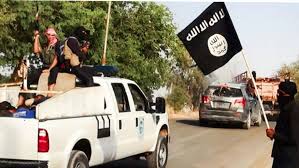
Present antagonism of the US in the lands of Islam is because of its unjust and unprincipled support of Israel in the ME. This has provided a chance to Al-Qaeda to feed upon this anger and gather semi-educated and unthinking Muslim youths into its folds.
The US just policies in the ME will befriend it to many Muslims around the world and consequently chock the supply of new recruits to Al-Qaeda, consequently bringing some peace and stability in certain countries in the lands of Islam including Iraq, Pakistan and Afghanistan.
In case of Saudi Arabia and other Gulf countries realignment and re-
orientation of Al-Qaeda philosophy of life is needed to bring Arab society back to at peace with itself. As regard Iraq, simple departure of the US forces will not bring peace to this country as long as Al-Qaeda stays in Iraq and sustains its operatives there.
A country can’t remain at peace with itself if it does not wish the same for its neighbouring countries. Presently, a terrorist organization trying to disrupt 1979 revolution of Iran, Mujahideen-e-Khalq, is having a safe haven in Iraq under the patronage of the US. In the US it is still officially considered as a terrorist organisation, however, now it is being used as a tool to destabilise Iran and remove the Government of the clergy; ‘an enemy of your enemy is your friend.
’ In this triangle of interests however many principles and ideals are
compromised. It does not fall in the jurisdiction of US national interests, however, the new Iraqi leadership will have to decide, whether, it iscompatible with their own national interests or not and until that time thisagent of death and destruction will continue to haunt Iraqi peace. Further tothis is Kurd imbroglio.
Divided among Iran, Iraq and Turkey they are a source of considerable discomfort for all these States. They have a president now in Iraq therefore they will have to work out a strategy that is peaceful and is in line with the changing global and regional scenario. Quite recently Iran went into Iraq in pursuit of Kurd rebels. Such skirmishes create a lot of bad blood between two Muslins neighbouring countries that have a lot to share with each other and can potentially ruin the regional peace and stability.
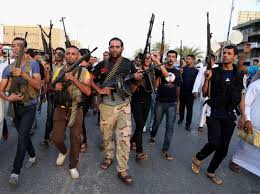
Among the agents of death, destruction and disruption of Iraqi society Saddamites called Baathists are also a potential element. They are largely ignored and downplayed because their activities are overshadowed by those of Al-Qaeda whose news largely dominate the media.
Political flexibility and alacrity that Baathists have displayed make them the most lethal weapon to Iraqi society than any other force of disruption. Many of them have joined politics and are out there to sabotage any political arrangement between varying political interests: hence four-month delay in the establishment of new government after Dec 2005 elections. They are the enemy within. Their role as spoilers has to be cut short to ensure peace and
stability in Iraq.
The spectre of sectarianism is rising slowly but surely in Iraq: this is the success of Iraq’s detractors and failure of Iraqi religious and political leaders. This is the only danger that has the potential to engulf the whole region and destroy the Islamic society that Islam has strived to create in the last 14 hundred years, like a jungle fire. We need to understand that violence in Iraq does not point to the birth pang of a new Iraqi nation but to the slow death of a great civilization.
Information
Adding a straw to break camel’s back there are Baathists, who will continue to overshadow the political scene of Iraq until such times as the steam is taken away from this philosophy of governance.
First appeared in Pakistan Observer on August 08, 2006

Noori al-Mali, prime minister of Iraq who is being blamed for most of its current troubles.

Muqtada Sadr: defying US occupaton

Tony Blair: the classic example of second fiddle role
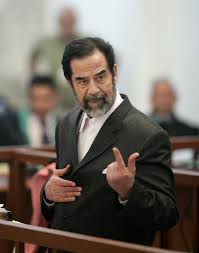
The Dictatory
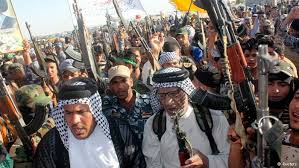
Mostly condescending nation